

Note: This post contains affiliate links which means if you click on a link and purchase an item, we will receive an affiliate commission at no extra cost to you.
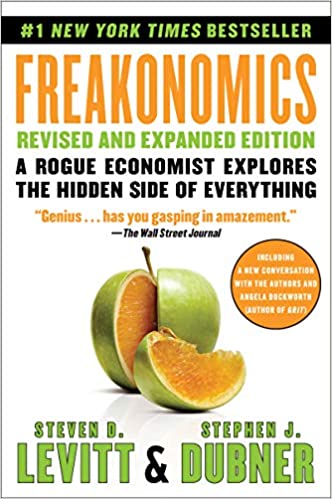 Ready to learn the most important takeaways from Freakonomics in less than two minutes? Keep reading!
Why This Book Matters:
Freakonomics helps readers understand the weight of incentives on everyone’s behavior.
The Big Takeaways:
- There are three different types of incentives: economic, social, and moral.
- If Using all three types of incentives becomes the most powerful tool in changing behaviors.
- Not all incentives motivate people equally.
- For example, disincentives for criminal behavior of prison would keep most people from becoming criminals, yet there are still people who break laws.
- Experts can manipulate information and use fear to mislead people who are not knowledgeable.
- For example, a salesperson could discourage a buyer from purchasing a less expensive car by saying that it’s not safe to help sell a more expensive car.
- A common assumption is when two things happen at the same time, one caused the other.
- Did a political candidate win an election because he or she had more money, or did more people contribute to a campaign resulting in a successful candidacy?
- People tend to jump to conclusions about the cause of problems.
- Evident and immediate causes are the main focus of issues, whereas small, indirect causes are ignored.
Want To Keep Reading?
Watch A Video Summary:
Additional Video From The Author:

